
Our roots: Textile heritage, entrepreneurial development and a clear connection to Vorarlberg.
The history of Huber Holding AG dates back to 1830. From early textile roots in Vorarlberg, a corporate group developed over generations that today brings together brands, production, trade, logistics and digital expertise.
From textile tradition to holding structure
A history that consists of more than just dates.
The development of today’s Huber Holding AG is closely connected with Austrian textile history. For many decades, production, brand development, quality and industrial advancement were at the centre of the company’s evolution.
Today, this heritage forms the basis for a corporate group that combines historical brand expertise with modern structures, international orientation and digital development.
Textile roots since 1830
As early as 1830, the company Josef Anton Heinzle laid the historical foundation for today’s corporate history. From these early textile roots, a corporate group with a strong connection to Vorarlberg developed over generations.
The step into independence
In 1903, Josef Huber founded an underwear manufacturing company in Dornbirn. The HUBER shirts produced there quickly gained strong popularity. As early as 1904, Josef Huber took over the representation of the products of the Anton Heinzle knitwear factory for large parts of the former monarchy.
The original company becomes HUBER
In 1908, Josef Huber acquired the original company in Goetzis and continued the business under the name “Anton Heinzle, owner Josef Huber”. In the same year, the MONTFORT brand was registered.
From production site to sales structure
In 1928, the operation in Goetzis was expanded by a new factory. In 1930, a sales branch followed in Vienna; by that time, the company already employed more than 100 people.
HUBER becomes a protected brand
In 1937, the HUBER word mark was legally protected for the first time — a central step in the development of the brand.
New brands shape the 1950s
In 1950, the DEXA brand was protected. During the 1950s, the licensed brand JOCKEY was also introduced and, from 1954 onwards, produced and sold under licence.
Expansion into new production locations
By 1960, Huber already employed around 970 people. During this phase, new locations and production areas were created, including Hollabrunn, Feldkirch, Laa an der Thaya, Haugsdorf and Muntlix.
Textile finishing at a new level
In 1967, the dyeing and finishing facility in Mäder went into operation. At the same time, modern jet dyeing machines were introduced and a particularly advanced mercerising system for knitted fabrics was established.
Huber reaches industrial scale
In 1970, the company reached an impressive scale with 2,140 employees.
Logistics becomes a competitive factor
In 1978, a high-bay warehouse was built in Götzis; further investments in logistics, IT, administration and site modernisation followed later.
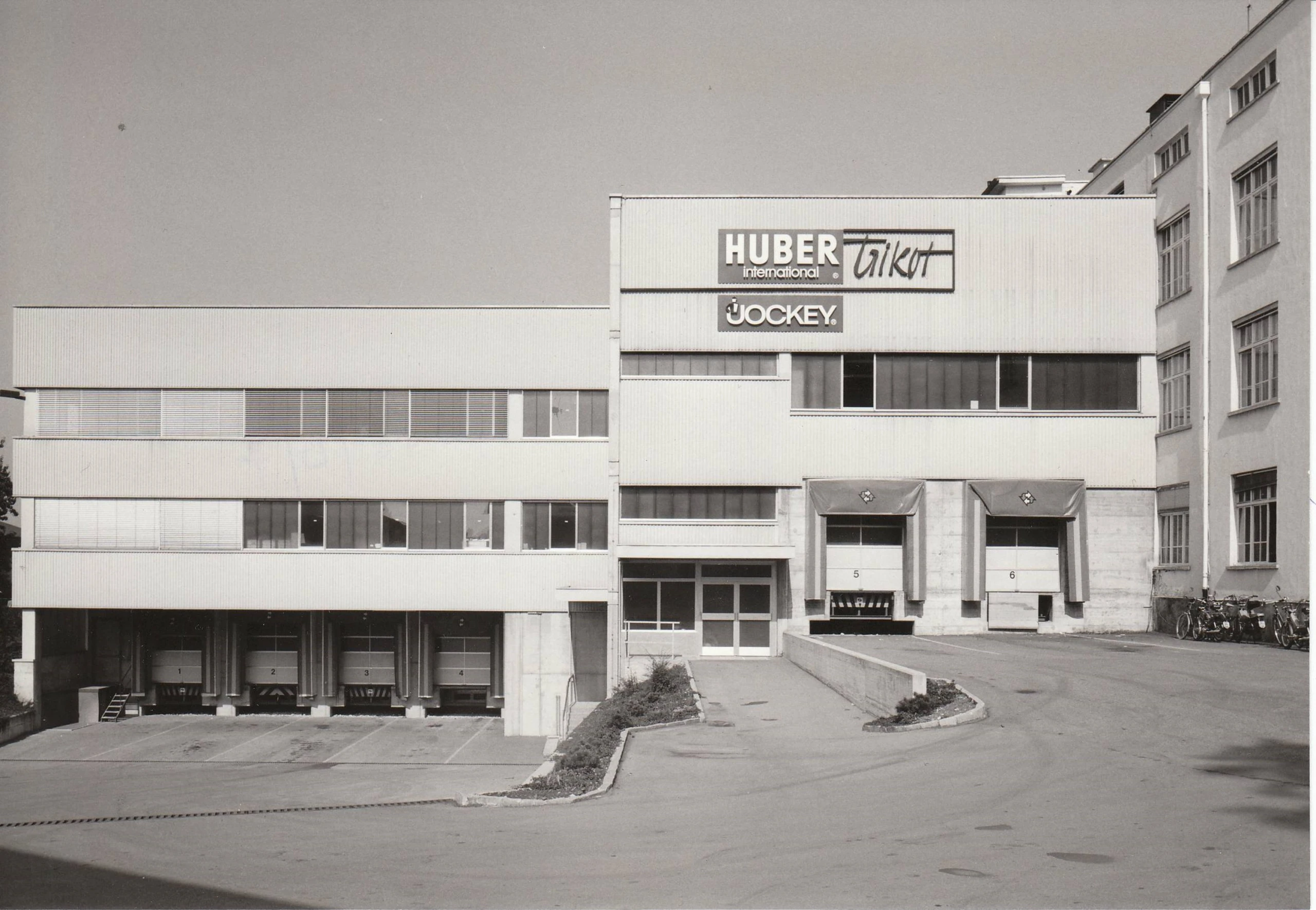
Early investment in digitalisation
In 1981, a dedicated IT building was constructed in Götzis - an early indication of the growing importance of technology and process control within the company.
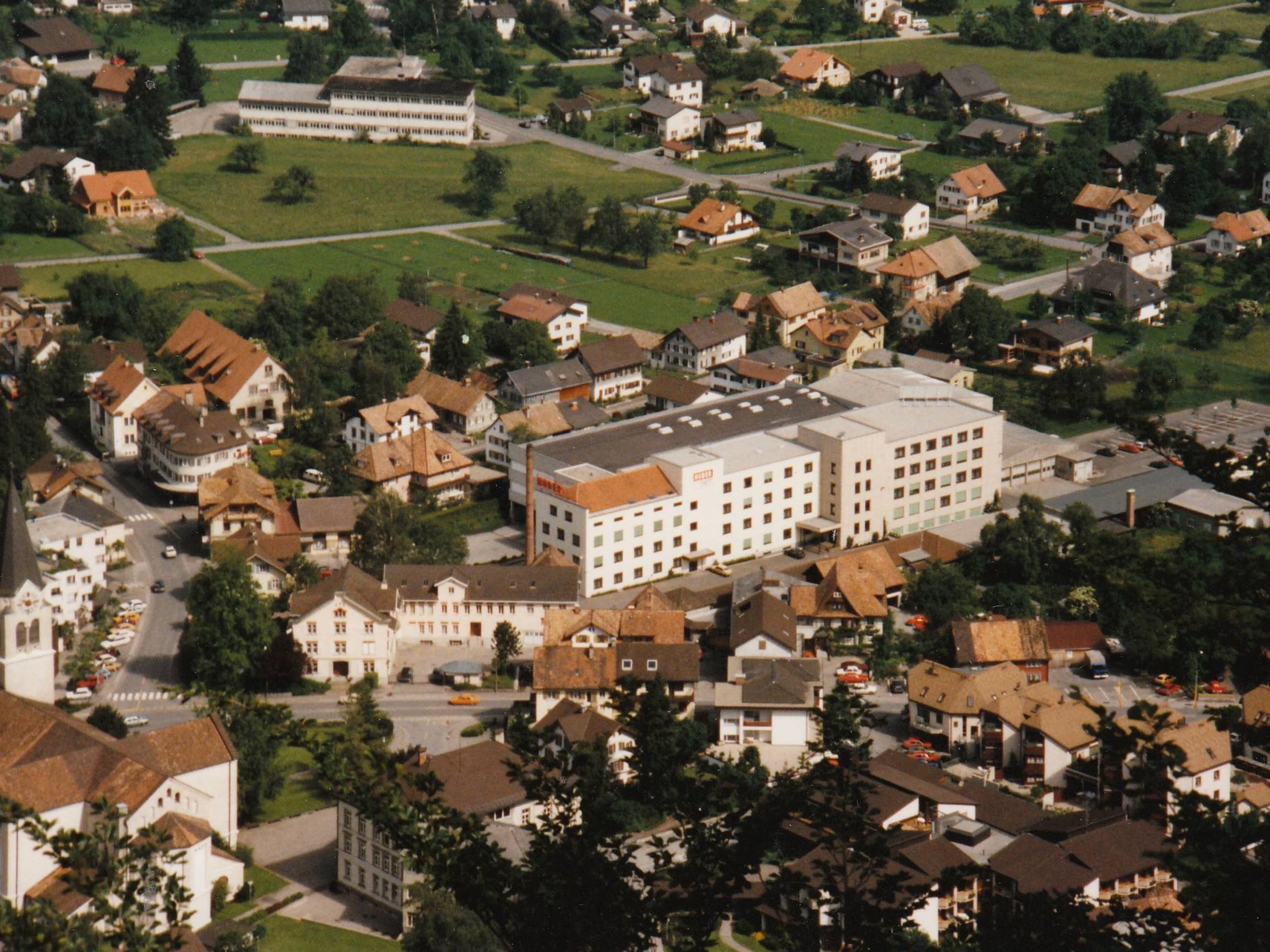
Expansion of trade, warehousing and brand presence
In 1983, the HUBER House in Vienna-St. Marx was built. In the same year, Benger in Bregenz and an operation in Neumarkt, Styria, were acquired.
HANRO and the step beyond borders
In 1991, the integration of HANRO strengthened the corporate group. In 1996, further international expansion followed with a branch operation in Győr, Hungary; in 1997, an operation in Feira, Portugal, was added.
The HUBER Museum preserves tradition
In 2002, the HUBER Museum was opened in Maeder - a visible sign of the preservation of corporate history and brand identity.
Strategic realignment
With the change in ownership structure, a new chapter began in the history of the Huber Group. The focus was on strategic development, clear direction and long-term thinking.
Restructuring, restart and future focus
The restructuring proceedings of the former corporate structure led to a comprehensive reorganisation. With the entry of the new shareholder, the basis was created for the strategic further development of Huber Holding AG.
From heritage to future .
The history of Huber Holding AG forms the foundation for what defines the corporate group today: strong brands, textile expertise, international locations and a clear connection to Maeder, Vorarlberg.